Waste Sculpting Compactor: Critical Design Concept
[Critical Design, Material and Interaction Concept]

Description
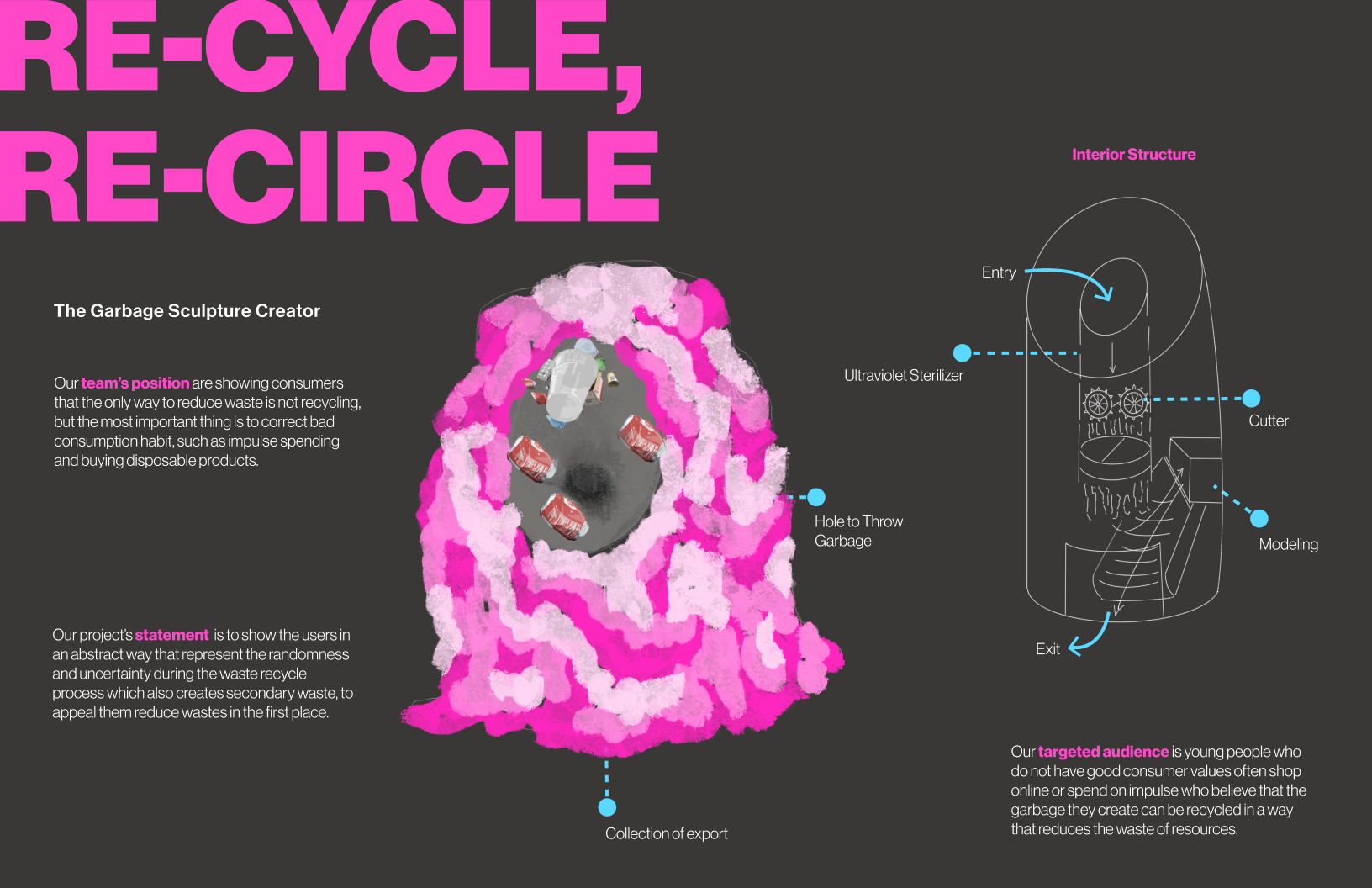
Waste Sculpting Compactor is a critical design project that reimagines a waste bin as an active feedback system. We built a physical bin prototype that turns discarded materials into miniature sculptures, using accumulation, screen based feedback, and storytelling to question whether repurposing waste is enough if consumption habits remain unchanged.
My Role
Material Designer · Animation Producer
Team
Dolores Han, Cheryl Liu, Chen Yi Nie, Lexie Li
Timeline
8-week course project
Context
Waste from excessive packaging and single use products is often easy to ignore because disposal hides the material consequences of consumption. Once an item is thrown away, users rarely see how much waste they have produced or how quickly it accumulates over time.
Core problem
People need a tangible and emotionally legible way to confront waste at the moment of disposal. A normal bin makes waste disappear, but this project asked how a disposal object could make accumulation visible, uncomfortable, and harder to dismiss.
Design intent
The project aimed to translate an abstract sustainability issue into a participatory critical design experience. Instead of making disposal more convenient, the goal was to create a moment of reflection that questions the habits and mindsets behind overconsumption.
Key Design Features

The project was developed as a physical waste bin prototype rather than only a speculative concept. The bin became the main interaction point where users deposit waste and encounter the system’s feedback.

Discarded materials are transformed into miniature sculptures, making waste accumulation visible instead of allowing it to disappear after disposal. The growing number of sculptures acts as a physical feedback signal that reflects the user’s consumption behavior.

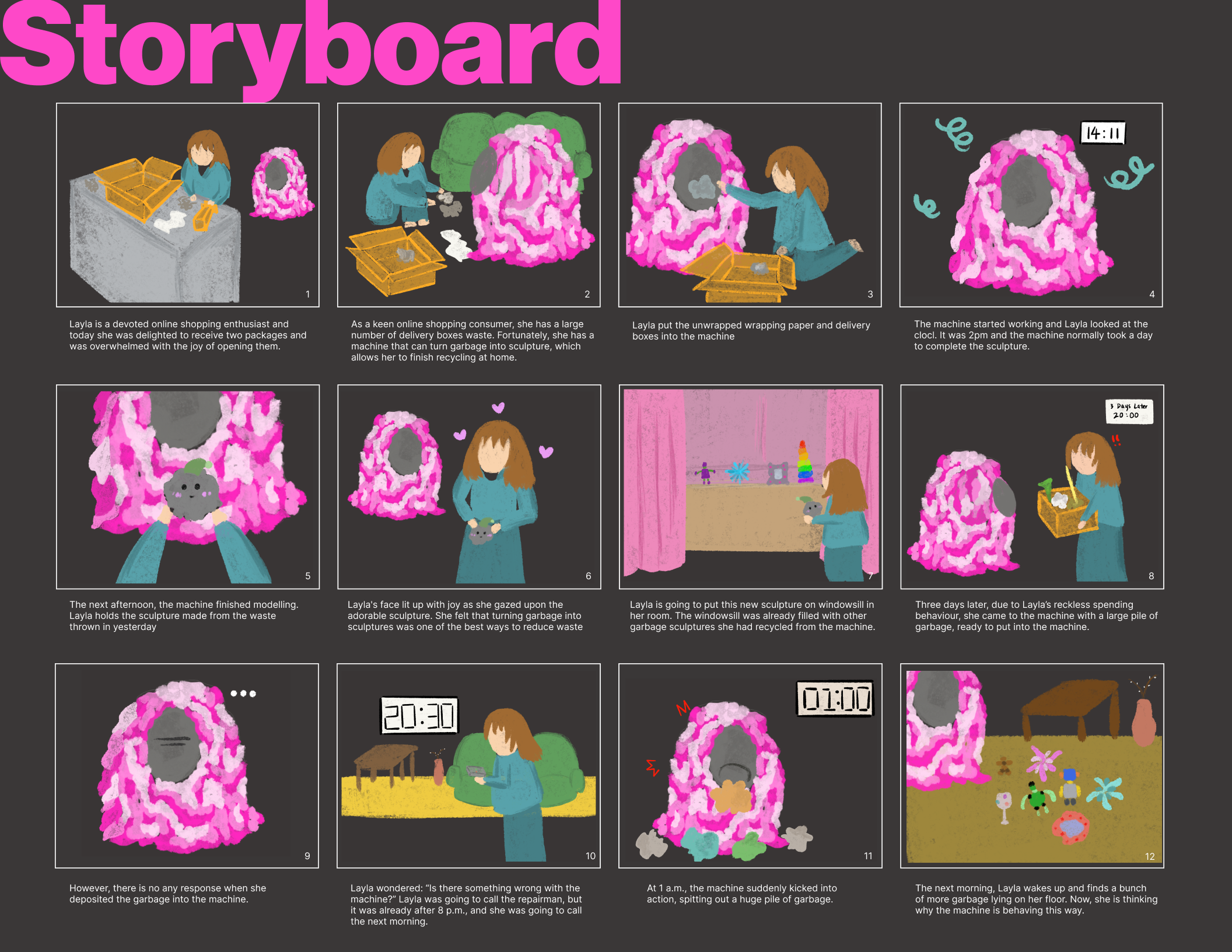
The storyboard communicates the project’s critical loop. If users continue consuming at the same pace, even repurposed sculptures may eventually become unwanted objects again. This reveals that the deeper issue is not only waste disposal, but the consumption mindset behind it.

A screen feedback animation was created to show the machine’s processing status after waste is deposited. Instead of functioning as a full app interface, the screen acts as a simple feedback layer that helps users understand that the machine is transforming discarded materials into sculptural objects.